19 February 2007

gwen stefani on motherhood, weight loss and Hollywood


On her public pregnancy: "It was weird being pregnant in a fishbowl situation. Especially on days when you feel really fat and disgusting and not cute. Pregnancy was challenging in a way I didn't expect. I was on tour and I was so sick. It was like PMS times a million."
On baby weight: "I worked out with my trainer throughout my whole pregnancy until about two weeks before. I cried during my last session. I was like, 'I can't breathe, I can't do this anymore. What am I doing?' It was crazy. All my life I had to work hard to stay in shape. I've always struggled with it. I was a little chubby when I was younger, and I didn't want to be that person forever. I became a swimmer at school - but only because I wanted to be skinnier! I'm extremely vain. I like wearing cute clothes."

On getting her body back: "There aren't any tricks, it's simple math: you put this much food in, you burn that much working out. I gave myself three months - but if I didn't have an album coming out, there's no way I would have gotten back into shape in that time. I worked out with my trainer five days a week, with weekends off. I would really recommend doing weights. I'm not into yoga and pilates - they don't work for me and I don't have the patience. I'm more like a man. I like going to the gym and lifting weights or doing a little boxing."

On the Hollywood body ideal: "It sucks that that's what is supposed to look good and that's what everyone strives to be. There's more to life than being on a diet. Clearly, I spend time thinking about it, and it's something I've had to deal with in my life. As I get older, I try not to focus on it, it's boring, it's a waste of life. What I have learned is that whether I'm fatter or thinner, people seem not to mind, they like me either way. It's more in your own mind than anyone else's."


13 February 2007

the reality of motherhood: photos

These are some really thought provoking photo sets from an American photographer, Torrie, who is documenting her own pregnancy:

This is her photo set of her pregnancy (http://flickr.com/photos/torrie/sets/72157594304111463/)

She has also started a new series called "The realities of pregnancy and motherhood"
(http://flickr.com/photos/torrie/sets/72157594516155043/).

Torrie says,
"I thought it would be interesting to highlight the trials and tribulations of pregnancy and motherhood instead of just the typical happy belly and baby shots.

This is her blog www.iprettymuchhateeverything.com

02 February 2007

Smart Mums

Hi everyone. I just wanted to let you know about a fantastic site www.smart-mums.com.au which has everything you need to know about motherhood, parenting and pregnancy. I've written a feature article for this month on the site called 'Baby Bump'. You can view it here: http://www.smart-mums.com.au/site/1435875/page/898531

30 January 2007

mother machines

I came across this article in The Age today. Women are 'birth-giving machines' according to Japan's Health Minister....of course everyone has to blame women for a falling birth rate....

Fury at Japan MP's baby gaffe
Tokyo, January 30, 2007
http://www.theage.com.au/news/world/fury-at-japan-mps-baby-gaffe/2007/01/29/1169919273239.html

Japan's Health Minister has angered female voters by describing women as "birth-giving machines" and imploring them to "do their best" to halt the country's declining birthrate.
In a speech to Liberal Democratic Party members in western Japan, Hakuo Yanagisawa said women of child-bearing age should perform a public service by raising the birthrate, which fell to a record low of 1.26 children per woman in 2005. Experts say an average fertility rate of 2.1 children is needed to keep the population stable.

"The number of women aged between 15 and 50 is fixed," Mr Yanagisawa, 71, said. "Because the number of birth-giving machines and devices is fixed, all we can do is ask them to do their best per head … although it may not be so appropriate to call them machines."

Mr Yanagisawa's reported admission that the description had been "too uncivil" failed to silence his critics. "It was extremely rude towards women," said Democratic Party leader Yukio Hatoyama.
GUARDIAN

28 January 2007

katie holmes


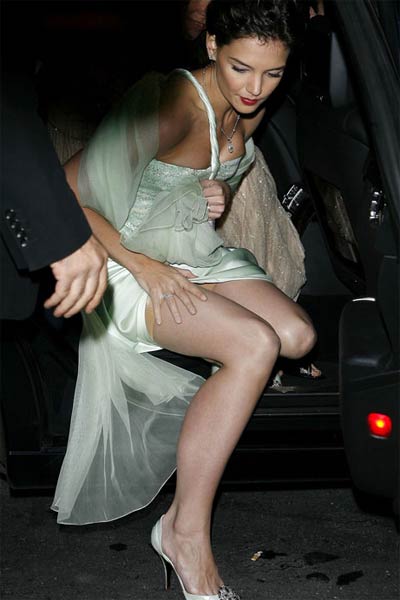
As if our dear Katie needed more grief about her body....why does the world insist on shaming women and their postnatal bodies? Where is the 'fat' on this woman? Seriously....WHERE IS THE "FAT"????

The secret's out now, Kate January 26, 2007
Victoria Newton- Biz UK

IT’S comforting to see that even beautiful KATIE HOLMES has her “fat” days.
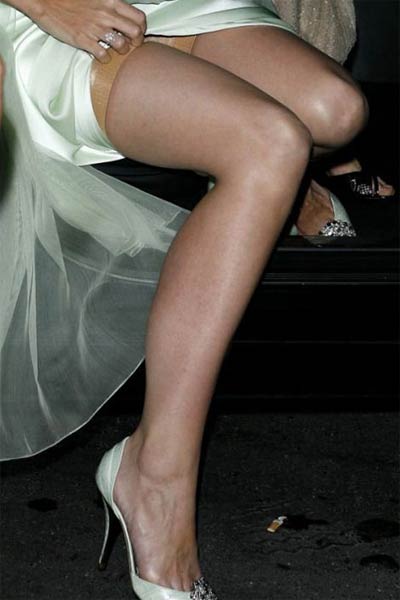
She was spotted at a fashion show wearing tan control pants under her peppermint gown – the sort women rely on to hide unwanted bumps.
I admire her for not having a tummy tuck like so many other celebrities. And who would have thought she gave birth to baby SURI just nine months ago?
Mrs Cruise was a guest at the Armani catwalk show in Paris on Wednesday.
During her trip there for fashion week she has been hanging out with super-skinny pal VICTORIA BECKHAM.
You have to sympathise with Katie – however slim you are, standing next to pencil-thin Posh is always going to make you feel a bit porky.
Let’s hope Katie keeps looking trim the natural, Bridget Jones way.

25 January 2007

caesar undies: update

Remember my narky post about Czela Bellies caesar wear? Well, the founder of the company has some reassuring words for all of us who thought caesar specific undies were just another gimmick. Thanks Jennifer, we appreciate the feedback ...


Hi Meredith,
I am so glad I stumbled upon your blog regarding Czela Bellies (TM). I am the Founder and Designer for Czela Bellies CesareanWear. I can't tell exactly from your post if you think these are a worthy product, or a non-needed niche novelty. I just wanted to assure you that I am a mom of 3, and a twice recovering C-section mom. Because even after healing, all of my pants, skirts, and underwear hit me at exactly the incision point, I didn't get back into wearing most "regular" clothes for quite a long, long time. I was feeling overwhelmed, sleep deprived & thinking I would never fit my clothes again. To have something that feels good, enables you to wear clothing with a waist again, not to mention something fun & actually cute would have been a delight. I do know first-hand what major surgery c-sections really are. My product exists because the surgery indeed is a mom's body. That's precisely why we designed this special feel good underwear; there is nothing like this on the market. I do hope my product can contnue helping mom's through this transitional time..even if it's just with a litttle pair of wonderful undies.

Thank you so much for the mention. I appreciate it very much.
Sincerely,

Jennifer Bourgoyne
Czela Blue Co./Czela Bellies CesareanWear (TM).


This is what I said:

Hi Jennifer,

I really appreciate your email and I think this paves the way for a really valuable dialogue. I have to admit my post was a bit narky without any knowledge of the origins of your product. With that in mind, I apologise if you have taken any offense. Of course (now) the product makes alot of sense given your personal experiences with caesars, so with all due respect, why dont you share that experience on your website? For mums, I think the personal goes really far. This is just of course my own opinion but given that you know the ups and downs of motherhood and have worked out a product that other mums would like to know about, make a connection with them instead of allowing them to think some man in a corporate office thought it would be a great idea to capitalise on the market value of caesareans.

Cheers,
Meredith

What does everyone out there think?

17 January 2007

magazines.


I love America for the plethora of magazines devoted to any topic you could possible imagine reading about...but since when did having a baby become an economic endeavour like buying a car?!

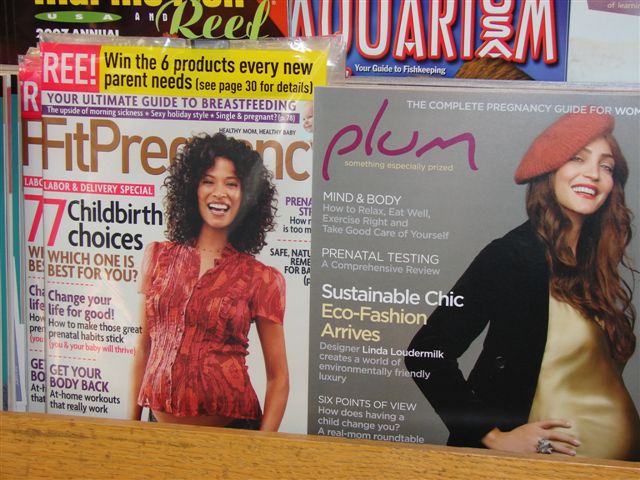
I saw this beauty in a Border's in Chicago.

In the photo to the right, the magazine 'Plum' is 'the first ever pregnancy magazine for women 35+'

Only. in. America.

13 January 2007

Cosmo Preg story: I need help!

I am writing a story for the next issue of Cosmo Preg about sex during pregnancy. Has your sex life changed since you became pregnant? Is it better or worse? What works best for you and your partner? How often are you having sex? Do you ever worry that you will harm the baby? How do you keep the romance alive in your relationship?I am looking for a wide variety of exeriences from women at various stages of pregnancy and from a variety of backgrounds. The best stories will be featured in the magazine, along with a photo of you and your partner. Please contact me ASAP by return email with your story or any questions: babybumpproject@yahoo.com.au

Freebirthing

Extreme childbirth: Freebirthing* 06 January 2007 * From New Scientist Print Edition. * Anna Gosline*

Any thoughts??

ONE HOT afternoon in August 1977, heavily pregnant Laura Shanley felt the early twinges of her first labour. Instead of calling a midwife, she calledover some friends. When her waters broke, she didn't dash for the hospital, just the bedroom. On hands and knees she gave birth to her son, John, in oneswift push. Ready to catch him was the only other person in the room, herhusband, David. Over the next few years Shanley, who lives in Boulder,Colorado, went on to have four more babies in the same way.Giving birth at home instead of hospital is not all that unusual. What setsShanley apart is choosing to go it alone without any professional help. Sheis part of a movement that advocates unassisted childbirth, or"freebirthing". The backlash against the perceived overmedicalisation of childbirth in the west has already seen some women reject hospitals infavour of a low-tech home birth with a midwife. Freebirthing proponents gofurther still, shunning even midwives. Almost all doctors and many midwives condemn unassisted childbirth asdangerous. The small but growing number of freebirthers, however, say it isperfectly safe for a woman to give birth alone, or at most, accompanied by apartner or friend. They believe that advice from medical staff interfereswith the normal birth process, and that women have easier labours if leftalone "as nature intended". "Birth is inherently safe and relativelypainless," Shanley claims, "provided that you don't interfere by usingdoctors or midwives."Freebirthers do have a point: childbirth has never been so medicalised. Formost of history women gave birth at home, possibly attended by a midwife ordoctor, but with little to no medical help. In the 20th century,city-dwelling and new, potent painkillers brought women into hospitals to deliver their babies.Here a growing number of interventions were introduced. In difficult laboursit became common for doctors to ease out the baby with forceps, or, later, asuction cup known as a ventouse. Syntocin, a synthetic form of the hormoneoxytocin, came to be used to trigger labour or speed it up. Once a lastresort, the ultimate intervention of a Caesarean section now accounts forabout one in four UK births. There is no doubt that these and other interventions have saved the lives ofmillions of women and children the world over. But campaigners and even somedoctors say they are overused and may even do more harm than good. Syntocin,for example, often makes contractions more painful.The countermovement began in the 1960s, spearheaded by the NationalChildbirth Trust in the UK and the Lamaze Institute and the InternationalChildbirth Education Association in the US. Today such groups lobby forchildbirth to remain as simple as possible, with the management of low-riskbirths ceded to midwives, who have only relatively low-tech forms of help attheir disposal. So far this has extended to the promotion of home births, with a midwifepresent but the nearest doctor an ambulance-ride away. The safety of homebirths is still hotly contested, but some want to progress to what could beseen as the natural childbirth movement's logical conclusion - completelyunassisted childbirth.Freebirthing has no formal organisations, so charting its growth isdifficult. When Shanley wrote a book on the subject in 1994, she says thepractice was nearly unheard of. Now most freebirthers use the internet tospread the word and swap tips. Shanley runs a website for these purposes andover the past decade she has heard from many other women who have givenbirth without help.Linda Hessel, who lives in Corvallis, Oregon, and had her third childunassisted, collects freebirthing stories from the website Mothering.com. About 160 mothers post from the US, Canada, the UK and Australia on the site's unassisted childbirth forum. It is a very small but growing movement,she says.Freebirthing is also growing in Australia, possibly influenced by pooraccess to midwives and the closure of some rural maternity wards over thepast few decades. The high rate of Caesarean sections in hospitals may alsobe a factor, says Sarah Buckley, a general practitioner (GP) in Melbourne.Six years ago, Buckley had her fourth child unassisted - a differentprospect for a GP, to be sure, but she supports the right of all mothers tofreebirth, making her one of the few doctors to do so.So do the freebirthers' claims stack up? Are they in fact giving birth thenatural way? In some ways nature has dealt humans a poor hand when it comesto giving birth. As early hominids evolved an upright walking posture, thepelvis had to pivot up, narrowing the birth canal. And the price we pay forour huge brains? Huge heads. No wonder the passage of a full-term babythrough the birth canal is a tight squeeze. "Birth is not as simple orstraightforward as it is in other animals," says Wenda Trevathan, a medicalanthropologist at the New Mexico State University in Las Cruces."Freebirthers say birth is inherently safe and relatively painless providedyou don't interfere by using doctorsor midwives"The shape of the pelvis may have led to another feature of human births.Thanks to the twisting and cramped interior of the birth canal, humanbabies, unlike those of other primates, tend to turn mid-birth and exit thevagina facing their mother's spine. This makes it harder for the mother toclear mucus from the baby's mouth after its head emerges. And if she pullsthe baby out too forcefully she may bend the spine and neck against itsnatural curve.That's why Trevathan argues that some form of birth attendant may have been de rigeur since bipedalism began to evolve 5 million years ago. "In mostcases, the mother and the baby benefit from some form of assistance," shesays.A glance through anthropological studies reveals that in almost allhunter-gatherer cultures, women tend to have some form of birth attendant.Even among the !Kung people of southern Africa, who say the ideal birth is asolitary (and silent) one, in practice women usually have help, at leastuntil they have a previous birth or two under their belt.Of course a birth attendant who merely helps the baby out and clears theirairways hardly requires midwifery training. But it does suggest thatfreebirthers who set their hearts on complete privacy may be striving forsomething that rarely happens "in nature".What does happen in nature? The World Health Organization estimates thatworldwide 15 per cent of labours have a life-threatening complication. Ithas also been estimated that the "natural" rate of maternal death fromchildbirth is between 1 and 1.5 per cent. The biggest risk is uncontrollable bleeding, even when women give birth in hospital.Birth is even riskier if it is you that is being born: in some developingcountries the neonatal death rate can be 10 per cent. The chief danger tothe baby is lack of oxygen, for example due to blood flow through theplacenta being restricted in a long and difficult labour.It is unclear, however, how these risk estimates apply to modern-day westernwomen who are generally healthy and well nourished. In fact freebirthersclaim it is better general public health that has led to the dramatic dropin maternal and infant deaths over the past century (see Graph).There is some evidence to support this claim. In the late 1970s, MarjorieTew, then a research statistician at the University of Nottingham in the UK,analysed the national birth statistics from 1958 and 1970. She found thathospitals had far higher infant death rates than either home births orindependent birth centres run by GPs, both of which used fewerinterventions. Contrary to the prevailing views, Tew concluded thatobstetric interventions hindered, rather than helped, the already fallingdeath rates. The underlying cause of the drop, she said, was better publichealth, nutrition, living conditions and infection control. It was arelatively low-tech medical intervention, the use of antibacterialsulphonamides to treat post-birth infections, that caused the biggest dropin maternal mortality over the past century.Home advantageThe accuracy of Tew's controversial conclusions hinge on whether heranalysis took adequate account of the fact that women would be more likelyto go to hospital if they were at higher risk in the first place. Tew didadjust for many risk factors including having a multiple pregnancy, a babyin the breech or head-up position, high blood pressure, previous Caesareans,and bleeding during pregnancy. However, there may have been other riskfactors omitted from the data.Tew's findings were so radical that it was many years before her work waspublished in an academic journal, and even then it was largely ignored. Inthe meantime the push for hospital births continued, and today they are thedefault setting for childbirth in the west.In most western countries even a standard home birth with a midwife presentis seen as a risk. In the US - where even uncomplicated hospital deliveriesare carried out by doctors, not midwives - most obstetricians are againsthome births. Two past presidents of the American College of Obstetriciansand Gynecologists have equated home births with child abuse. At one of itsmeetings last year the college gave out car bumper stickers saying: "Homedelivery is for pizza"."US obstetricians gave out car bumper stickers saying: 'Home delivery is forpizza'"The UK government has recently voiced support for making home births aneasier option, but they still account for only 2 or 3 per cent of births. InEurope only the Netherlands stands out, with a 30 per cent home-birth rate.The big question, of course, is whether home births are safe. On the onehand, there is the lack of doctors and their sometimes lifesavinginterventions. On the other, hospitals can be stressful places. Adrenalin(epinephrine in the US), the fight-or-flight hormone produced in response tostress, seems to slow labour, which could explain why decades of researchhave linked stress and fear to longer and more difficult births.The best way of answering the question would be to randomly assign a largenumber of women to either home or hospital births. But few would put up withhaving their care chosen for them. Instead, researchers can only study theoutcomes of the choices women make for themselves. This risks home birthsappearing safer than they really are because they tend to be selected bywomen who are white, well-off and well-educated - all factors that lowertheir risk of difficult births - as well as being at low medical risk.One of the biggest and best studies in this field was published last June,(BMJ, vol 330, p 1416). It attempted to follow every North American womanplanning a home birth under the care of a certified midwife in the year 2000and ended up including 5418 births.No mothers died and the infant death rate was 1.7 per 1000 - a similarfigure to low-risk hospital births in the US. Home-birth campaigners havehailed these results as vindication of their stance. Critics, on the otherhand, point out that 12 per cent of the women had to be transferred tohospital, usually for maternal exhaustion or because their labour wasn'tprogressing. And 3.4 per cent were admitted as an emergency, mainly forfetal distress or maternal haemorrhage.While this debate seems likely to run and run, many of even the staunchesthome-birth supporters shun freebirthing. Marsden Wagner, the WHO's formerdirector of Women and Children's Health, says it is a step too far. "Thereare a very few cases when things go bad," he says. "Midwives are trained toknow when things are going in the wrong direction."If the evidence on the safety of standard home births is unclear, it isalmost non-existent for freebirthing. There seems to be only one study ofwestern women who intentionally had unassisted births, published in 1987.This looked at a strict Christian community in Indiana called the FaithAssembly Church, who refused all medical attention for religious reasons. Itdocumented 344 births over seven years.The figures make grim reading. The neonatal death rate was 19 per 1000 livebirths, compared with 7 per 1000 for the rest of Indiana. Maternal mortalitywas 8.7 per 1000, 20 times higher than for other women in Indiana.Studies published in medical journals seem unlikely to influence thefreebirthing community, however. From their websites and message forums itis clear that these women reject orthodoxy in numerous ways. Many advocatelong-term breast-feeding and home-schooling; some also shun infant vaccinesand prenatal medical care. Without ultrasound scans and other checks,someone could unwittingly plan an unassisted birth while carrying twins or abreech baby - as happened with Laura Shanley's third child. Even that maynot deter the most radical freebirthers, who scorn medical assistance evenfor serious complications. But not all go so far. "These variations aresomething that I would want to know about," says Hessel, "and I might makedifferent plans accordingly."Freebirthers' attitudes to emergency back-up also vary; some women areprepared to head to hospital if the labour goes awry, others don't. Hesselknows of three infant deaths that might have been prevented if the mothershad sought help soon enough.Naomi Stotland, an obstetrician at the University of California, SanFrancisco, has stopped trying to understand the freebirthers. They feel, shesays, "that they are very in touch with their bodies and they can tell whensomething is right and something is wrong".There will never be a randomised trial of freebirthing. "It's not somethingthat is easy to prove or even study scientifically," says Stotland. "These are belief systems about birth." And belief is a powerful thing.
Anna Gosline is a science writer in Vancouver, Canada
From issue 2585 of New Scientist magazine, 06 January 2007, page 40-43

10 January 2007

Harajuku girls


I thought I would post some examples of Japanese maternity clothes I found in Harajuku (you can see the rest in the Bump Gallery on Flickr--just click on the link in the sidebar or go here http://www.flickr.com/photos/babybumpproject/)

09 January 2007

BBP in The Age

One more thing, I got a call from Paul Kalina from The Age when I was away asking for a sound bite for an article about Hollywood babies...Well my phone has been off for 5 weeks, so I missed the message but he still gave Baby Bump Project a plug in the 30th December edition..yay!

Is she or isn't she? Expect to read all about it
http://www.theage.com.au/news/in-depth/is-she-or-isnt-she-expect-to-read-all-about-it/2006/12/29/1166895479348.html#

I'm back


Hi everyone! Sorry it has been a while since my last rant. I am now officially back from overseas after a great jaunt through America and Japan. I have some amazing photos which I will be posting on Flickr as well as some great maternity stories. Just yesterday I was traipsing through Harajuku (yes, the same Harajuku a la Gwen Stefani) and came across this maternity store, Ange Maternity (www.angeliebe.co.jp), I had been trying to find for about 4 days. So, to my delight I was able to somewhat discreetly photograph every aspect of the store and gather more preggo magazines for my collection! I wont go into too much detail here, but as I expected, the visibly pregnant body is pretty much non existent in Japan. In most of the maternity stores, pregnant bodies in advertising are represented by Anglo (not Asian) women (just look at the cover of the Angelie catalog!). Some of you may think maternity clothing choice is limited here in Australia... well let me just tell you, in Japan, maternity clothing is so awful you would absolutely die if you saw some of outfits I have seen! To give you a picture, pinafores and floral pints are pervasive. More to come....

21 December 2006

6 weeks

Photobucket - Video and Image Hosting

"The preggo brain seems to have kicked in now as well…… I keep finding myself doing the stupidest things. I’ve put the toaster in the fridge, empty bottles in the fridge, forgotten to do any washing. I’ve also completely missed our turn-off on the way home and not even realised for about 10mins when I was completely out of Melbourne! Oh yes, and it’s very difficult to cook dinner in the oven on 0 degrees too I found out!! Haha!Ahhh the joys of pregnancy! But I’m LOVING absolutely every second of it!!"

20 December 2006

early days


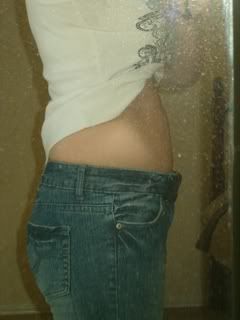
"Here is a shot of my belly at 5 weeks and 3 days. I am all belly normally you see, and the thais* often think I am at least 6 months along....wahhhhhh....."

*she is in Thailand at the moment*

19 December 2006

birthing boost

I was just reading that Jana Pittman had her baby, Cornelius (what is it with famous people and obscure baby names?!)

Read about it here: http://www.theage.com.au/news/people/janaa-baby-joy/2006/12/15/1165685877310.html

Then I saw this article in the Sydney Morning Herald about the benefits of 'heightened fitness' postpartum
http://www.smh.com.au/news/sport/supermums-are-on-drugs-naturally/2006/12/08/1165081155039.html:

Supermums are on drugs, naturally/Jacquelin Magnay/December 9, 2006
AFTER giving birth, mothers have a six-week rush of extra red blood cells, a hormonal cocktail that aids endurance and strength, and a gobsmacking jolt of awareness of their toughness in surviving childbirth.

Physiologically elite athletes can benefit from this window of heightened fitness, presuming of course that the late-night feeds and disjointed routine are as under control as the leaking of all things from all places and the sore back from softened ligaments caused by the pregnancy hormone, relaxin.

In the East German doping regime of the 1970s and 1980s, and in the Russian gymnastic program in the 1970s, there were reports that coaches encouraged athletes to get pregnant up until the 16-week mark and then abort, so that the athletes could train harder and perform better from the supply of another pregnancy hormone - human chorionic gonadotropin.
HCG boosts the production of steroids in women. Pregnant women also have extra erythropoietin (EPO), which helps supply oxygen to the body and enables athletes to train for longer periods.
(I seriously hope this isn't true.....)

But it is more well known that the East German doctors would induce abortions in their athletes because of the birth defects caused by female athletes taking steroids.
There have been many examples of supreme athletes bouncing back from motherhood quickly.
Olympic champion Marion Jones had a son in June 2003 and was back in training four weeks later.

Irish runner Sonia O'Sullivan resumed training 10 days after giving birth, at the urging of her coach and partner Nic Bideau, and then backed up to win silver in the 5000 metres at the Sydney Olympics.

i heart NY


I just had an exhausting weekend in the Big Apple...I survived the crushing crowds of Christmas crazed shoppers on Fifth Avenue and took in the spectacle that is the Radio City Music Hall Christmas Spectacular (so cheesy but something to cross off on my once in a lifetime list) and the chorus line moves of the infamous Rockettes. Also, got in some great runs in Central Park. I succumbed to a Sex and the City tour of New York which sounded ridiculous but actually brought me to some areas of NY that I had never before explored. Found a great little maternity shop in the Village which I photographed obsessively. NY mums are interesting (well, at least the ones that I saw): firstly, all of them are dressed to kill with Gucci belt bags, Prada sunglasses, Kate Spade nappy bags and the latest in Bugaboo. I swear I have never seen more Bugaboo than in NYC. Bleeker playground in the Village (a very posh area known as the home of SJP, Liv Tyler and a long list of celebrity mums) was the hub of well-heeled mums and their bubs. Everyone had a pram that probably cost more than my car...And the children! Dressed in baby North Face (expensive American outwear), Burberry and Gap, NY kids look just as amazing as their mothers. I didnt notice as maternity shops as much as I noticed the overwhelming number of specialty children's clothing shops and baby accessory stores. Strangely enough, I was flipping through the channels in a moment of brief shopping respite in my hotel room and landed upon an interview with Liz Lange, the doyenne of fashionable maternity wear here in the US. Lange started her business in the early 90s and was basically the first designer to do stretchy material for pregnancy..and look how far we have come! Her big break was in 1996 when Cindy Crawford was pregnant with her first child and considering the choices at the time were pretty minimal, Crawford only wore Liz Lange and the rest is history. Lange is exclusively contracted to supply maternity wear for all Target stores here (too bad Target Australia doesn't contract her as well!). She has a pretty amazing story and I am hoping to make contact with her in the next few weeks.

13 December 2006

Dr. 90210

As I have reignited my relationship with good old American television, last night I was watching a reality show on E! called Dr. 90210. You can get acquainted with the show here:

http://cache-origin.eonline.com/On/Dr90210/index.html

Seeing as plastic surgery is one of the most barbaric acts women (for the most part) can willingly inflict upon their own bodies, why not document surgeries in minute detail?! Needless to say, I've been hooked and I can't really explain why. Last night, I had the misfortune of watching the story of a single mum of two planning to undergo a labiaplasty, vaginal tightening, breast augmentation and lift and brazillian (yes, brazillian) butt lift...and this was done all at once. The doctor basically told this woman that childbirth basically 'ruins' the birth canal which is why her vagina is so loose. He told her he could completely erase any trace of having had two children.

I am pretty uncomfortable with the whole discourse of 'choice' and plastic surgery. I tend to think if you are really unhappy with how you look, then you have a right to do with your own body as you please. However, it is pretty unbearable to watch the absolute butchery women put themselves through in order to have a tighter vagina or 'perkier' breasts. The naked bodies of these women are poked and prodded, and more generally exposed to the flock of surgeons tearing into their skin, pulling out tissue and sewing them back up. It's really a horror to watch but perhaps so compelling because it makes you (or well, me) think about why people do this to themselves and also for the voyeuristic pleasure in seeing a complete bodily transformation (without exercise or good nutrition). The show tends to avoid showing the extreme pain involved in recovery. We just get flashes a few weeks post-op when the women are absolutely gushing about the results and the women parade around in bras or bikinis for all to gaze upon their tight and toned bods.

The whole concept of plastic surgery is obviously not a new topic of discussion for feminists but I have to say, I was really surprised from the marathon of episodes I watched (due to my still screwed up sleeping) a good proportion of episodes were devoted to 'fixing' the postnatal bodies of new mothers. Whether it's a tummy tuck or a vaginal 'reconstruction', mums in California are turning out in droves to have the erasure of their maternal bodies documented for the show. Maybe this is just another 'only in America' thing but it's all a bit too sci-fi for me.

Listening to Mothers

Perhaps it comes as no surprise that American women are experiencing unwanted medical interventions in childbirth. I remember interviewing my mother for an undergraduate women's studies subject about her pregnancy/birth experience. Mum gave birth to me in 1980 in a private hospital with an obstetrician at quite possible the height of medicalised birth in America. She told me that not only was she given an episiotomy without her permission, her obstetrician also yanked me out with forceps because he couldn't be bothered to let me take my time down the birth canal! And let's be honest, he wanted to go home (it was 10pm). That was 26 years ago; it's a terrible realisation that women are still undergoing interventions in birth without their consent.

Here is a nice piece from the Boston Globe reporting on The Listening to Mothers II report by Childbirth Connection , a New York group founded in 1918 to improve maternity care:

For expectant women, it's not too much to ask
By Tina Cassidy December 8, 2006
http://www.boston.com/news/globe/editorial_opinion/oped/articles/2006/12/08/for_expectant_women_its_not_too_much_to_ask/

09 December 2006

all is revealed...


These photos were submitted by a fantastic woman, nearing her due date....
 
Creative Commons License
The Baby Bump Project by Meredith Nash is licensed under a Creative Commons Attribution-Noncommercial-No Derivative Works 3.0 United States License.