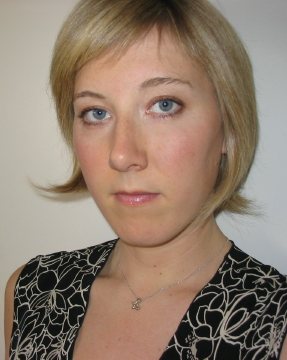
Today, I've written an op ed for The Age about Christina Aguilera and the fear of childbirth:
http://www.theage.com.au/news/opinion/too-posh-to-push-no-just-too-scared/2008/03/01/1204227049136.html
I am really eager to hear what you think!
Showing posts with label the age. Show all posts
Showing posts with label the age. Show all posts
02 March 2008


17 November 2007
Mums behaving badly

Sushi Das has written a great piece for The Age today about 'mums behaving badly' or how pregnant women are navigating all of the rules and regulations of being pregnant, the constant cultural surveillance of motherhood and the spaces (perhaps small) of resistance available to women who don't conform (especially when it comes to controversial topics like drinking and alcohol).
Read it here:
http://www.theage.com.au/news/in-depth/strongmotherhoodstrong-pressure-to-be-perfect-starts-before-the-birth/2007/11/16/1194766949198.html
02 May 2007
letter in The Age
Yay! My comment about caesareans for overweight women was published in The Age :
http://www.theage.com.au/text/articles/2007/05/01/1177788138415.html
http://www.theage.com.au/text/articles/2007/05/01/1177788138415.html
30 April 2007
caesareans and obesity
It is very interesting that elective caesareans have become the hot topic of the week (particularly in The Age) ever since Catherine Deveny wrote 'The great birthing con is taking choice away from women' last Thursday.
You can read it here: http://www.theage.com.au/news/opinion/the-great-birthing-con-is-taking-choice-away/2007/04/25/1177459782569.html
Being the person that I am, I wrote a letter in response. Here is a small sample:
Honestly, the situations in which birthing women make these ‘choices’ require careful analysis and of course, critique. There is no question that some women perhaps make birth ‘choices’ based on inadequate or biased sources of information or as a result of sacrifices made on behalf of their partner or even for the health of the unborn baby. Yet, obscuring the often positive benefits of obstetric technology only complicates women’s efforts to use that same technology for their own benefits. The argument that technology like caesarean sections, which are no doubt more ‘risky’ than vaginal birth, cannot be used for feminist or woman-centred approaches to childbirth is wrong. The fact that many women appreciate the use of pain relief in childbirth despite awareness of the risks of epidural injections into the spine, for example, suggests that women are sometimes able to influence medical practice and use intervention for their own ends. The insistence that women can/should/ought to find childbirth to be empowering or easy or ‘natural’ neglects the diversity of Australian experiences of birth. In addition the notion that the ‘alternative’ or midwife-driven birth culture has successfully challenged medical hegemony is also misleading. Although the values and aims of woman centred one-on-one midwifery care may resonate with many birthing women and have more appeal than hospital birth, the fact is that the overwhelming majority of births are still highly medicalised. Medicalisation is stronger than ever in Australia and the midwifery movement is essential in assessing and critiquing current obstetric practices.
Then, today I was thinking about an issue that has been completely lost from any of the recent dialogue surrounding elective caesarean being that overweight or obese women are much more likely to have a caesar than any other women. In 1995 the rate was 16.6 per cent and last year it was up to 23.2 per cent which quite closely follows the increase in the rising number of women considered to be 'obese', about 25%. It is not women who are 'too posh to push' that are necessarily pushing up the caesarean rate in the 'Western' world. As a result of the medical assumption that extra fat restricts the baby's safe passage in a vaginal delivery, overweight women are becoming increasingly subject to 'emergency' caesars and other unwanted medical intervention.
In light of this, I found a great article on Without Measure, the blog of the International Size Acceptance Association with some helpful information on avoiding a caesar as a 'woman of size'.
http://womeasure.wordpress.com/2006/11/16/avoiding-surgery-lowering-the-cesarean-rate-in-big-moms/
You can read it here: http://www.theage.com.au/news/opinion/the-great-birthing-con-is-taking-choice-away/2007/04/25/1177459782569.html
Being the person that I am, I wrote a letter in response. Here is a small sample:
Honestly, the situations in which birthing women make these ‘choices’ require careful analysis and of course, critique. There is no question that some women perhaps make birth ‘choices’ based on inadequate or biased sources of information or as a result of sacrifices made on behalf of their partner or even for the health of the unborn baby. Yet, obscuring the often positive benefits of obstetric technology only complicates women’s efforts to use that same technology for their own benefits. The argument that technology like caesarean sections, which are no doubt more ‘risky’ than vaginal birth, cannot be used for feminist or woman-centred approaches to childbirth is wrong. The fact that many women appreciate the use of pain relief in childbirth despite awareness of the risks of epidural injections into the spine, for example, suggests that women are sometimes able to influence medical practice and use intervention for their own ends. The insistence that women can/should/ought to find childbirth to be empowering or easy or ‘natural’ neglects the diversity of Australian experiences of birth. In addition the notion that the ‘alternative’ or midwife-driven birth culture has successfully challenged medical hegemony is also misleading. Although the values and aims of woman centred one-on-one midwifery care may resonate with many birthing women and have more appeal than hospital birth, the fact is that the overwhelming majority of births are still highly medicalised. Medicalisation is stronger than ever in Australia and the midwifery movement is essential in assessing and critiquing current obstetric practices.
Then, today I was thinking about an issue that has been completely lost from any of the recent dialogue surrounding elective caesarean being that overweight or obese women are much more likely to have a caesar than any other women. In 1995 the rate was 16.6 per cent and last year it was up to 23.2 per cent which quite closely follows the increase in the rising number of women considered to be 'obese', about 25%. It is not women who are 'too posh to push' that are necessarily pushing up the caesarean rate in the 'Western' world. As a result of the medical assumption that extra fat restricts the baby's safe passage in a vaginal delivery, overweight women are becoming increasingly subject to 'emergency' caesars and other unwanted medical intervention.
In light of this, I found a great article on Without Measure, the blog of the International Size Acceptance Association with some helpful information on avoiding a caesar as a 'woman of size'.
http://womeasure.wordpress.com/2006/11/16/avoiding-surgery-lowering-the-cesarean-rate-in-big-moms/
Subscribe to:
Posts (Atom)